

- CAIR also calls on USCIRF and State Department to Better Document Anti-Muslim, Anti-Semitic Policies in France, Europe
- CAIR notes that the report also does not document Israel’s anti-Muslim and anti-Christian laws and related religious freedom violations
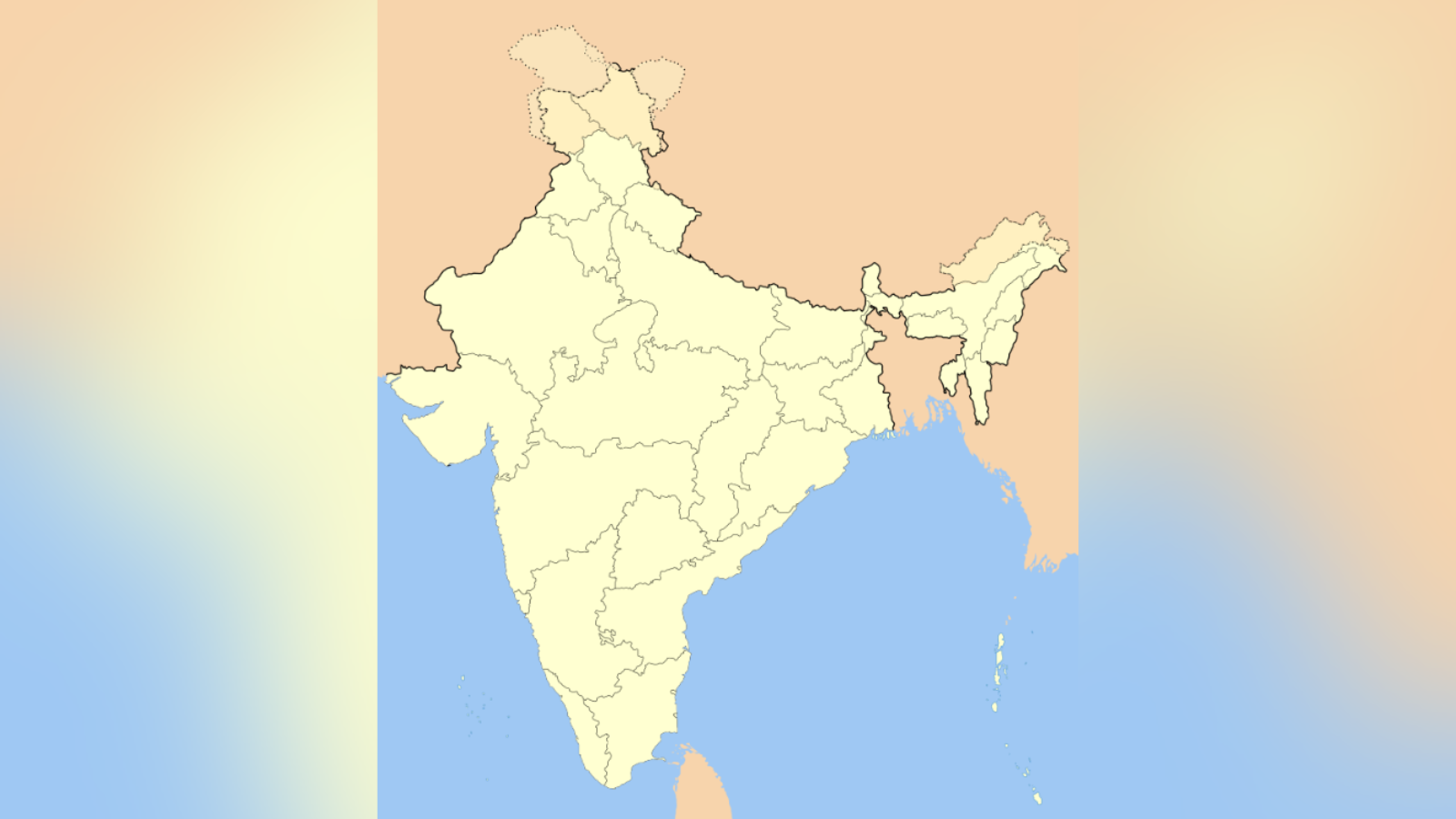
(WASHINGTON, D.C., 5/4/23) – The Council on American-Islamic Relations (CAIR) today welcomed the release of the U.S. Commission on International Religious Freedom’s (USCIRF) “2023 Annual Report” by calling on the State Department to follow the commission’s recommendations by finally designating India as a “Country of Particular Concern.” CAIR also urged the State Department and USCIRF to take further actions to document and respond to religious discrimination in France and other European countries, in addition to Israel’s anti-Muslim and anti-Christian laws and state sponsored and condoned acts of violence.
For the fourth year in a row, USCIRF has recommended the U.S. government designate India a “Country of Particular Concern” (CPC) for targeting Muslims and other religious minorities. CPCs are countries designated by the U.S. government where those listed governments engage in or tolerate “particularly severe” violations of religious freedom.
In a statement, CAIR Director of Government Affairs Department Robert S. McCaw said:
“CAIR is urging the Department of State to take action by designating India as a country of particular concern for violating the fundamental rights and liberties of its religious minorities, including over 200 million Muslim citizens. This recommendation has been made by the USCIRF for the past four years, and it is time to address this urgent issue.
“CAIR calls on the USCIRF and the State Department to better respond to the increasing anti-Muslim and antisemitic religious freedom violations in France and Europe – something that lacks significant documentation in the report. CAIR also notes that despite there being increasing Israeli government acts of discrimination, violence, land confiscation, intrusion on houses of worship, indiscriminate arrests, detention of minors, and laws targeting Muslims and Christians, the USCIRF’s report fails to document these trends or make any recommendations. These violations require independent profiles and recommendations for swift and effective action.
“The U.S. government must take appropriate action in response to other state actors documented by USCIRF for violating the human rights and religious freedoms of their Muslim citizens, including China, Burma, and the Central African Republic.”
USCIRF is an independent, bipartisan U.S. federal government agency that makes policy recommendations to the President, Secretary of State, and Congress, and tracks the implementation of these recommendations.
USCIRF’s 2023 Religious Freedom Report highlights state and non-state actors’ violations of religious freedom, including the targeting of Muslim worshipers and suppression of Islamic practices worldwide.
Excerpts of USCIRF’s 2023 Report Documenting Anti-Muslim State Policies
Protecting Muslims in India: Report found that: “In 2022, religious freedom conditions in India continued to worsen. Throughout the year, the Indian government at the national, state, and local levels promoted and enforced religiously discriminatory policies, including laws targeting religious conversion, interfaith relationships, the wearing of hijabs, and cow slaughter, which negatively impact Muslims, Christians, Sikhs, Dalits, and Adivasis (indigenous peoples and scheduled tribes). The national government also continued to suppress critical voices—particularly religious minorities and those advocating on their behalf—including through surveillance, harassment, demolition of property, and detention under the Unlawful Activities Prevention Act (UAPA) and by targeting nongovernmental organizations (NGOs) under the Foreign Contribution Regulation Act (FCRA).”
The report also highlighted that “Throughout the year, destruction of property—including places of worship in predominantly Muslim and Christian neighborhoods—continued” and “Social media platforms continued to facilitate widespread disinformation, hate speech, and incitement of violence toward religious minorities. In February, Twitter removed a caricature shared by the verified account of Gujarat BJP depicting Muslim men hung by a noose”
Report recommendations include: “Designat[ing] India as a ‘country of particular concern,’ or CPC, for engaging in systematic, ongoing, and egregious violations of religious freedom, as defined by the International Religious Freedom Act (IRFA)” and “Impose[ing] targeted sanctions on Indian government agencies and officials responsible for severe violations of religious freedom by freezing those individuals’ assets and/ or barring their entry into the United States under human rights related financial and visa authorities, citing specific religious freedom violations” The report also calls on Congress to “Raise religious freedom issues in the U.S.-India bilateral relationship and highlight concerns through hearings, briefings, letters, and congressional delegations.”
Muslim Persecution in Europe: The Report’s “Other Key Developments” section’s “Religious Freedom Concerns in Europe noted “In 2022, religious communities throughout Europe continued to face restrictions on certain religious practices and discrimination on the basis of their faith. As in years past, Muslims and Jews navigated discriminatory policies and societal intolerance that increasingly threatened their way of life, compelling some individuals to emigrate. Christian communities similarly faced rising prejudice.” Examples of such European state discrimination against Muslims include:
- “In January, the French Senate approved an amendment to ban head coverings in sporting events, although the National Assembly had not moved to enact the ban by the end of the year.”
- In February, the French government “temporarily or permanently clos[ing] 906 [Muslim] establishments, including mosques, Qur’anic schools, businesses, and civil society organizations, and seized over $57.5 million”
- “In March, the Court of Cassation—France’s highest court—upheld a ban set by the Bar Council in Lille that prohibited the wearing of religious symbols in courtrooms, including head coverings”
- “In May, the town council of the French city of Grenoble voted to permit women to wear a “burkini,” but France’s top administrative court ruled against that decision.”
- “In August, a body of the ruling political party in Denmark proposed a ban on hijabs for elementary school girls. In October, the Swiss government introduced a draft law to ban face coverings and fine violators up to approximately $1,100 (1,000 Swiss francs).”
- Vandals targeting “Muslim cemeteries throughout Europe, including in Germany and Sweden” and “Unknown individuals thr[owing] stones at a mosque in Sweden in September.”
Biden Administration Muslim Refugee Resettlement: The report noted that “FY 2022, the Biden administration designated certain populations for priority consideration as refugees—including Turkic Muslim refugees who are nationals or last habitual residents of China, Rohingya Muslim refugees who are nationals or last habitual residents of Burma…” and “. “In December, the State Department announced an initiative to resettle vulnerable Rohingya refugees as a part of USRAP.” [Page 9]
Protecting Rohingya Muslims in Burma: Report noted that “In 2015, Burma passed race and religion laws with the support of hardline Buddhist nationalist groups such as the Ma Ba Tha. These laws regulate religious conversion, marriage, and births; they also restrict the religious freedom of non-Buddhists, particularly Muslims.” [Page 15]
Report recommendations include: “Expand[ing] options for Rohingya refugees to resettle in the United States—with an emphasis on especially vulnerable members of that community—and encourage like-minded partner countries to do the same” and “Redesignat[ing] Burma as a ‘country of particular concern,’ or CPC, for engaging in systematic, ongoing, and egregious violations of religious freedom, as defined by the International Religious Freedom Act (IRFA).” [Page 14]
Protecting Uyghur Muslims and Other Turkic Minorities in China: Report found that “In 2022, religious freedom conditions in China further deteriorated” and “During the year, Chinese authorities continued their repressive sinicization of Islam and forced assimilation policy in Xinjiang that attempts to eradicate Uyghurs’ and other Turkic Muslims’ distinct ethno-religious identities. In May, a report based on leaked internal police files from two Xinjiang counties confirmed the existence and brutality of concentration camps where Uyghurs have been detained. The report held high-level CCP and government officials, including CCP leader Xi Jinping, responsible. New reports noted a policy shift from detaining Uyghurs in camps to sending them to prisons. Forced labor, political indoctrination, mass surveillance, an intrusive homestay program that embeds officials in Uyghur households, and forced interfaith marriages also continued.” [Page 16]
Report recommendations include: “Redesignat[ing] China as a ‘country of particular concern,’ or CPC, for engaging in systematic, ongoing, and egregious violations of religious freedom, as defined by the International Religious Freedom Act (IRFA)” and “Continue imposing sanctions to target Chinese officials and entities responsible for severe religious freedom violations” and “creating a UN Commission of Inquiry to investigate and identify perpetrators of ongoing genocide and crimes against humanity in Xinjiang and document other severe human rights abuses throughout China.” The report also urged the U.S. Congress to “Support legislation to counter the CCP’s malign influence in the United States, particularly its lobbying efforts that undermine religious freedom and related human rights.” [Page 16]
Protecting Muslims under Russian Occupation: The report found: “In Russian-occupied Crimea, occupation authorities have regularly imprisoned predominantly Muslim Crimean Tatars who oppose the Russian occupation, charging them in connection with their Muslim identity and religious activities.” [Page 36]
Syrian Government Targeting of Sunni Muslims: The report found that “The government angered its Alawi Muslim base by releasing hundreds of detained Sunni Muslims—whom it has long deemed militants—during the holy season of Ramadan. Yet, the regime kept at least 136,000 people in arbitrary detention and continued to capitalize on the conflict-fueled sectarianism it helped establish, appropriating Sunni Muslims’ religious authority and stoking Alawis’ fear of Sunnis gaining power.” [Page 40]
Report recommendations include: “Designate Syria as a ‘country of particular concern,’ or CPC, for engaging in and tolerating systematic, ongoing, and egregious violations of religious freedom, as defined by the International Religious Freedom Act (IRFA), and redesignat[ing] [U.S.-designated terrorist group Hay’at Tahrir al-Shamas] an ‘entity of particular concern,’ or EPC, for engaging in systematic, ongoing, and egregious violations of religious freedom, as defined by IRFA.” [Page 40]
Protecting Muslim Rights in Tajikistan: The report found “In 2022, religious freedom conditions in Tajikistan remained dire. The Tajik government continued to severely repress the country’s Muslim majority. Children under the age of 18 are barred from visiting mosques and all other public religious activities except for funerals. Private religious education is banned, and children are only allowed to receive religious instruction from their parents at home. Since 2014, the government has appointed all imams, required them to wear state-issued religious garments, and strictly dictated their sermons. People under the age of 35 are not allowed to perform the Hajj.” [Page 42]
Protecting Muslim Rights in Central African Republic: The Report found “Previous years’ trends of state-backed fighters targeting Muslim civilians with violence, torture, and extrajudicial detention continued. In at least one instance, fighters defending Muslim communities targeted Christian civilians in retaliation for state-backed abuses against Muslims” and “Muslim Central Africans also continue to face discrimination and displacement. Government authorities charge Muslims higher fees and fines than non-Muslims for the same services or penalties. Analysts familiar with the situation on the ground assess that Muslims are disproportionately represented among CAR’s displaced population and have struggled to return safely to their areas of origin due to continued intimidation and lack of support.” [Page 52]
Protecting Muslim Rights in Kazakhstan: The report found “The government continued to suppress groups and individuals it perceived as following ‘nontraditional’ religions, along with Sunni Muslims who do not subscribe to the state’s interpretation of Islam” and “Kazakhstan also maintained an official ban on women and girls wearing a hijab in public schools in the face of continued calls by activists and parents to rescind the ban. In October, an Almaty school barred a Muslim schoolgirl who wears a hijab from attending class for a month, stating that religious garb did not comply with uniform regulations issued by the Ministry of Education.” [Page 60]
Protecting Muslim in Sri Lanka: The report found “In 2022, religious freedom conditions in Sri Lanka continued on a worrying trajectory. The Sri Lankan government targeted the rights of religious minorities, particularly Muslims and Hindus, by using problematic legislation, engaging in discrimination against them, and instigating land disputes intended to expropriate their property. Authorities harassed and imprisoned religious actors associated with the protest movement in 2022 (Aragalaya, or “Struggle” in Sinhala) and intimidated members of minority religious communities. Muslims who posted supportive messages for protesters on social media were identified, questioned, and arrested under the International Covenant on Civil and Political Rights (ICCPR) Act.”
Protecting Muslim Rights in Uzbekistan: The report noted Uzbekistan government authorities “sought to limit some elements of Islam and Islamic practice unofficially considered inappropriate. For instance, in May police in two districts of Tashkent rounded up at least 10 men and threatened them with arrest if they refused to have their beards shaved, drawing criticism from the U.S. ambassador to Uzbekistan. Similarly, officials have harassed women and girls who wear the hijab and maintained that only a ‘light-colored national headscarf’ may be worn in schools. Despite a public announcement made in recent years that children can attend mosques, in April security officials in the exclave of So’x (or Sokh) reportedly raided and drove out children from the Hazrati Ali mosque during the holy month of Ramadan. Authorities allegedly dissuaded or hindered attempts by Muslims to reopen previously closed places of worship, such as the Abu Zar mosque and the Nazira Bibi Xonim mosque in Tashkent, and required Muslims interested in performing the Hajj or Umra pilgrimages to apply to their mahalla [local community government].” [Page 68]
– – – –
CAIR’s mission is to protect civil rights, enhance understanding of Islam, promote justice, and empower American Muslims.
La ission de CAIR es proteger las libertades civiles, mejorar la comprensión del Islam, promover la justicia, y empoderar a los musulmanes en los Estados Unidos.
Become a Fan of CAIR on Facebook
http://www.facebook.com/CAIRNational
Subscribe to CAIR’s Email List
https://action.cair.com/a/newsletters
Subscribe to CAIR’s Twitter Feed
http://twitter.com/cairnational
Subscribe to CAIR’s YouTube Channel
Follow CAIR on Instagram
https://www.instagram.com/cair_national/
Donate to CAIR
https://action.cair.com/a/donate
Do you like reading CAIR press releases and taking part in our action alerts? You can help contribute to CAIR’s work of defending civil rights and empowering American Muslims across the country by making a one-time contribution or becoming a monthly donor. Supporters like you make CAIR’s advocacy work possible and defeating Islamophobia an achievable goal. Click here to donate to CAIR.
If you would like to join CAIR’s media list, please sign up here: https://action.cair.com/a/newsletters — For more information, email: [email protected], CC [email protected]
END
CONTACT: CAIR National Deputy Director Edward Ahmed Mitchell, 404-285-9530, [email protected]; CAIR Government Affairs Director Robert McCaw, 202-742-6448, [email protected]; CAIR National Communications Director Ibrahim Hooper, 202-744-7726, [email protected], CAIR National Communications Manager Ismail Allison, 202-770-6280, [email protected]