

By: Ismail Allison
Six years after Brenton Tarrant entered two mosques in Christchurch, New Zealand and opened fire on worshippers during Friday prayers, killing 51 in total, it is evident Islamophobia is not the exclusive domain of fringe personalities who would carry out a mass shooting.
Islamophobia claims as its adherents heads of state and government officials, corporate tycoons and financiers, and media moguls and influencers. Its insidious effects are evident around the world – from the blood-soaked ruins of Gaza, to the killing fields of Myanmar, to the concentration camps of Chinese-ruled East Turkestan.
In 2023, CAIR received 8,061 complaints nationwide at the time marking the highest number of complaints the organization has ever recorded in its 30-year history. This late 2023 surge in Islamophobia brought numerous stories of human tragedy, perhaps most shockingly the murder of a six-year-old Palestinian-American boy named Wadea al-Fayoume in Chicago. Sadly, CAIR’s data for 2024 shows we received 8,658 complaints. This is a seven percent increase over 2023. This year, a woman in Texas tried to drown a 3-year-old Muslim child in a swimming pool. After making hateful slurs, the woman was taken away in handcuffs while reportedly saying, “Tell [the child’s mother] Mom I will kill her, and I will kill her whole family.”
The main hub for the kind of vitriol that both inspires and justifies anti-Muslim violence can be found on social media. Research conducted by the Islamic Council of Victoria in Australia found that there were “3,759,180 Islamophobic posts made on Twitter between 28 August 2019 and 27 August 2021″ and that only “14.83% of anti-Muslim tweets end up being removed.” The authors of the 2023 European Islamophobia report cite research by the Estonian Human Rights Centre which found that between March and April 2023, “anti-Muslim hate speech amounted to 15% of all the reported posts” and “ranged between 4% and 6% of the reported posts” in the following periods.
The seeming algorithmic preference given to anti-Muslim content on Twitter since it was purchased by Elon Musk, who has himself shared anti-Muslim content and supported anti-Muslim parties, is not without real world consequences. The false claim that the perpetrator of a mass stabbing at a young girls dance class in England was a Muslim, a claim partially furthered by Musk himself who retweeted the disinformation, spread all over the platform. It was on the basis of this claim that anti–Muslim riots broke out across the country.
Social media platforms are also often used as a direct stage for acts of anti-Muslim violence. The perpetrator of the Christchurch massacre famously live streamed his killings on Facebook. A study by the Center for the Study of Organized Hate’s (CSOH) details how Instagram is used to promote communal violence against Muslims in India,by Hindutva nationalists. Nearly a third of the over 1,000 Instagram accounts researchers tracked over a six month period posted videos of brutal physical assaults. These accounts are reportedly permitted to fundraise from their posts. Similarly, The Intercept reported in 2023 that “a series of advertisements dehumanizing and calling for violence against Palestinians,” meant to test how Facebook moderates bigoted content on their platform, were approved and allowed to remain online.
Social media must be a place of free speech. No government or entity should be allowed to have control over what is accessible on social media platforms. However, social media platforms should not give privileges to certain forms of content above others, especially not if those forms of content call for hatred and violence. Platforms should develop transparent reporting systems, prohibit the monetization of anti-Muslim hatred, create robust appeals processes for both removed and retained content, and publish regular transparency reports specifically tracking Islamophobic content and enforcement actions. It is also essential for the owners of platforms to engage in dialogue with members of the Muslim community.
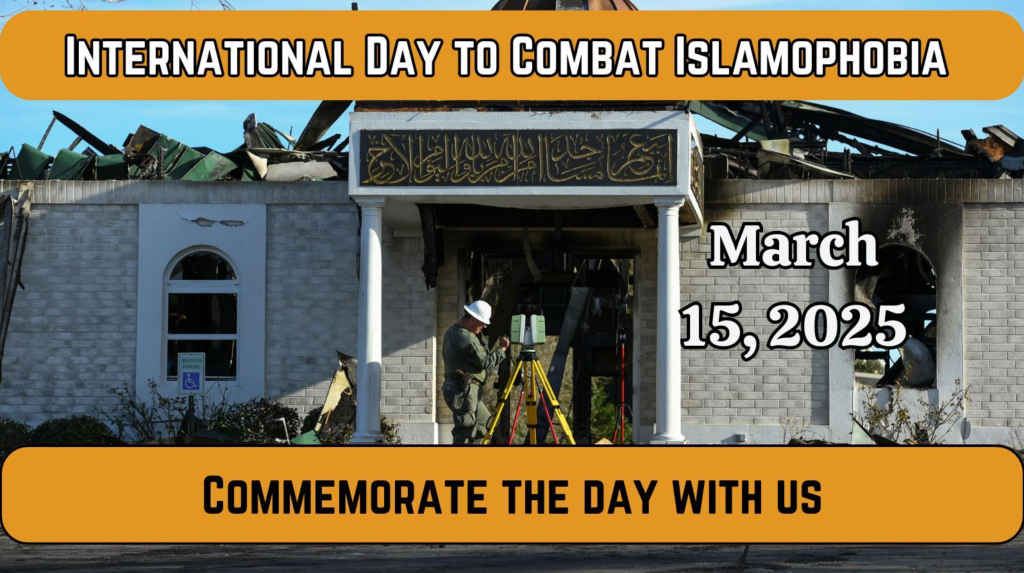
As Muslims from Washington, D.C. to the West Bank fast from food and drink in their annual observance of the holy month of Ramadan, we today reflect on Brenton Tarrant’s murder-spree by observing the United Nations designated March 15 as the International Day to Combat Islamophobia. We see now and have seen throughout history what Islamophobia and other forms of religious bigotry lead to. It is incumbent upon those who have the ability to do so to curb the spread of this insidious ideology and prevent it from manifesting as it did in Christchurch in 2019, and as it does across the world.
Ismail Allison serves as the National Communications Manager at the Council on American-Islamic Relations (CAIR), the nation’s largest Muslim civil rights and advocacy organization