

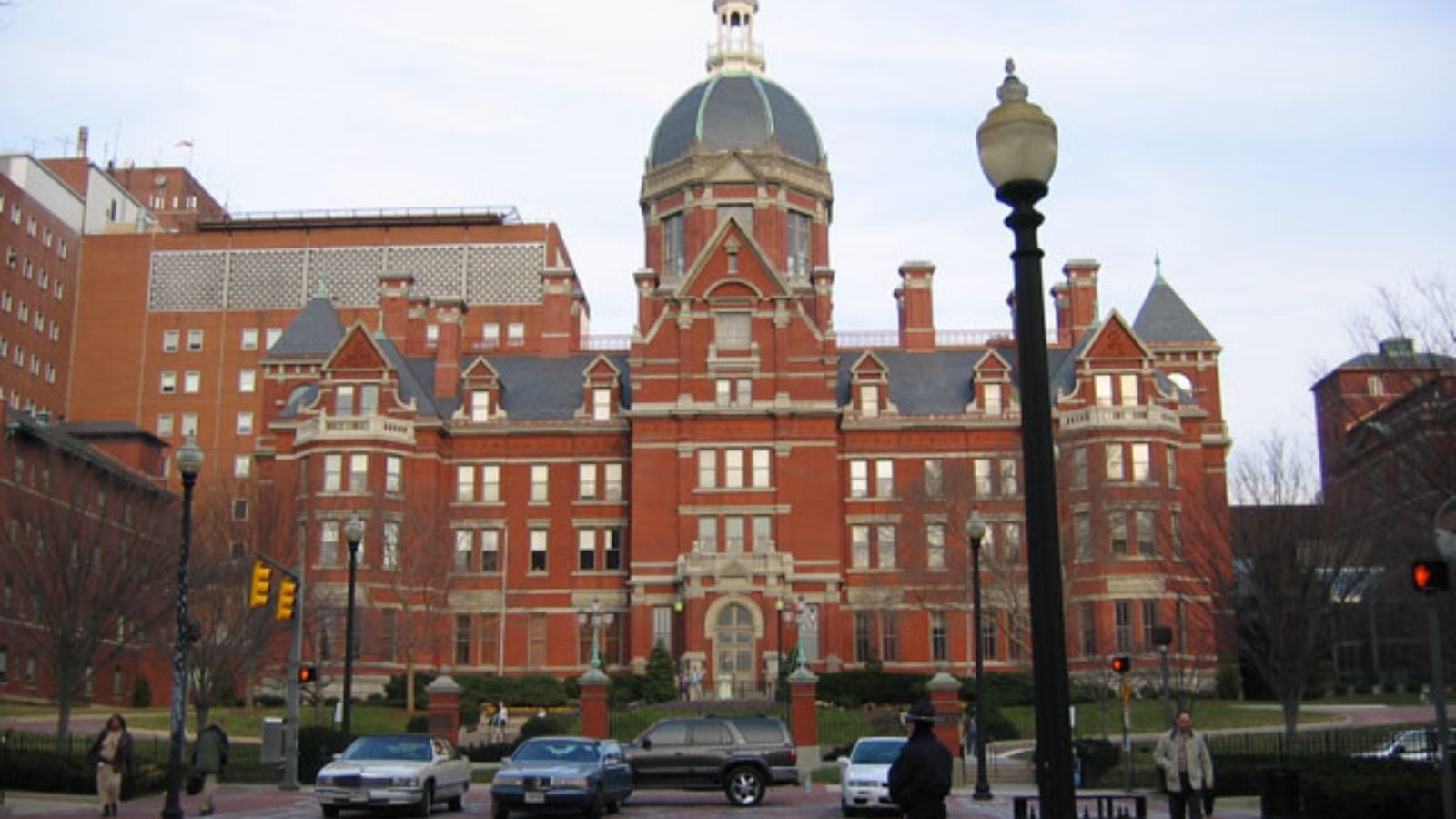
Civil rights group condemns reports of surveillance, calls on university to remain transparent, uphold free speech, protect safety and rights of students as it fulfills terms of resolution
The Maryland office of the Council on American-Islamic Relations (CAIR) today called on Johns Hopkins University (JHU) officials to comply with a growing demand to divest from the Israeli government’s ongoing genocide in Gaza and apartheid in the West Bank after the U.S. Department of Education Office of Civil Rights (OCR) entered a resolution with the university to resolve complaints of discrimination filed by both Palestinian and Jewish students amid campus protests last school year.
While the Department of Education investigation was initially launched to assess discrimination against students based on shared Jewish ancestry, it backfired when OCR also found many examples of anti-Palestinian and Islamophobic complaints documented and handled by JHU. The resolution now requires the university to take measures to address discrimination and harassment against students based on both Jewish and Arab shared ancestry.
The federal investigation was prompted by a pro-Israel complainant who alleged that the University discriminated against students “on the basis of national origin (shared Jewish ancestry)” by failing to respond to “incidents of harassment” during the 2023-2024 school year. However, one of the incidents misleadingly noted was an open letter signed by over 24 JHU faculty members who expressed support for an immediate ceasefire to end the targeted killings of civilians, aid workers, medical workers and journalists. The complainant falsely alleged that the ceasefire letter led to an “unsafe and hostile environment” for Jewish students.
A petition launched by JHU students has collected hundreds of signatures from students, faculty and staff, and donors calling on the University to end its complicity and role in Israel’s genocide and apartheid. The signatories have endorsed a proposal to the University’s Public Interest Investment Advisory Committee (PIIAC) to divest “from companies that perpetuate, enable, and profit from the humanitarian crisis in Palestine.”
SEE: US settles with Johns Hopkins over alleged discrimination against Arabs, Jews
Johns Hopkins University PIIAC Divestment Proposal
“The findings of the OCR investigation substantiate that this agreement will require oversight and transparency in order to inspire trust, and that it is one of many steps necessary in order to meaningfully address the troubling pattern of anti-Palestinian and Islamophobic incidents on campus,” said CAIR’s Maryland Director Zainab Chaudry. “While we welcome news of the resolution, we also urge JHU administrators to heed its community’s growing calls for divestment, and to remain vigilant against attempts to weaponize or exploit the serious issue of antisemitism to repress, punish or intimidate students or censor unpopular views. Students exercising their constitutional rights to free speech and assembly should not face harassment or repercussions for their advocacy.”
The civil rights group has strongly condemned reports that on December 6, 2024, police officers contracted by the University, armed with batons and pepper spray, reportedly intimidated, chased and harassed student protestors peacefully exercising their First Amendment rights during an event, and allegedly photographed them without their consent. It is seeking clarity into reports that the University is allegedly utilizing AI surveillance cameras to identify student activists and monitor their activities in common areas of the campus grounds.
SEE: Press Release Unprecedented [Johns Hopkins Campus Police] Misconduct: Sanctioned Suppression of Free Speech Demonstration
CAIR is calling on JHU to uphold principles of free speech and protect the rights and safety of students advocating against genocide as it fulfills the terms of the resolution, which in part requires the University to conduct a climate assessment, review incident reports, and offer annual trainings to faculty, staff and students on harassment and discrimination based on national origin and shared ancestry. The group is seeking transparency into the climate assessment process, as well as training development and execution, to ensure cultural competency, accuracy and objectivity.
BACKGROUNDER:
OCR opened an investigation into whether the University failed to respond to alleged harassment of students on the basis of national origin (shared Jewish ancestry) in a manner consistent with the requirements of Title VI. During the course of the investigation, the University provided OCR with documentation of 99 other reports and complaints of alleged harassment and discrimination based on shared ancestry between October 2023 to May 2024.
These complaints included allegations against a professor who called Palestinians “barbaric” and “savage animals” and stated that it was “time to reclaim Gaza.” JHU conducted an investigation into this incident, determined that he had created a hostile environment in violation of its Discrimination and Harassment Policy, and placed him on leave.
In its legal analysis, OCR found that the University has “comprehensive policies that cover its Title VI obligations to the campus community” but that it did not adequately assess whether incidents of reported harassment based on shared Arab or Jewish ancestry contributed to a hostile environment for the campus community. It stated as an example that although the University received multiple reports that its professors directed “stereotyped slurs toward Arab and Palestinian people, including in a communication one professor sent directly to his students,” the University failed to assess whether these professors’ attitudes “impacted their students’ equal access to education” or contributed to a hostile climate.
JHU has entered into an agreement with OCR to take the following steps:
• provide annual training to all employees and staff responsible for investigating complaints and other reports of discrimination, including harassment, based on shared ancestry or ethnic characteristics;
• provide training to all staff and students addressing discrimination based on race, color and national origin, including harassment based on shared ancestry and ethnic characteristics;
• develop and administer a climate assessment for students and staff in the University to evaluate the climate with respect to shared ancestry and provide OCR with a report summarizing the assessment results with a description of activities the University proposes to take in response to the assessment results;
• review its response to each report of discrimination and/or harassment on the basis of shared ancestry received by the University on or after October 7, 2023 through the end of the 2023-2024 school year; and
• provide OCR with the University’s response to all complaints of discrimination, including harassment, on the basis of shared ancestry, for the 2024-2025 school year.
As the University undertakes a review of its anti-harassment policies and trainings for staff and students, CAIR emphasizes the importance of ensuring that these measures do not censor free speech nor stifle or punish legitimate advocacy protesting violations of human rights or international law. The university must ensure that students, particularly those advocating against Israel’s ongoing genocide in Gaza, are safeguarded from doxxing, harassment, repression, retaliation and intimidation.
The rise in tension on campuses, particularly following Israel’s genocide in Gaza, highlights the urgent need for universities to uphold their commitment to inclusivity and respect for all individuals. This includes creating safe spaces for students to express their views on critical human rights issues without facing backlash.
CAIR urges Johns Hopkins University to engage frequently and meaningfully with Arab and Muslim students and allies on campus to also center their voices and experiences, and to ensure that any policies and training are developed collaboratively with their input. CAIR is offering its support and services to assist with productive actions and dialogue.
In August, CAIR launched its Unhostile Campus Campaign, a project aimed at fostering a campus environment where Palestinian, Muslim, Arab, Jewish, and other students, faculty, and staff opposing the genocide of the Palestinian people in Gaza enjoy free speech and academic freedom and are not subjected to state force or university discipline due to their viewpoints.
Students, staff, and faculty who wish for their university or college campus to be considered as a potential “institution of particular concern” should complete the form linked below.
SEE: Report a Hostile Campus to CAIR
The organization adds in a disclaimer that the new form is intended solely to inform CAIR’s UnHostile Campus Campaign. Students, faculty, and affiliates seeking CAIR’s legal and advocacy services should continue to contact their local office or chapter, or in the event that there is no local chapter, file a formal report with CAIR’s National Civil Rights Department.
CAIR’s mission is to protect civil rights, enhance understanding of Islam, promote justice, and empower American Muslims.
La misión de CAIR es proteger las libertades civiles, mejorar la comprensión del Islam, promover la justicia, y empoderar a los musulmanes en los Estados Unidos.
END
CONTACT: CAIR Maryland Director Zainab Chaudry, [email protected], 410-971-6062; CAIR Maryland Outreach Coordinator Kim Syuardi, [email protected], 202-850-9293