

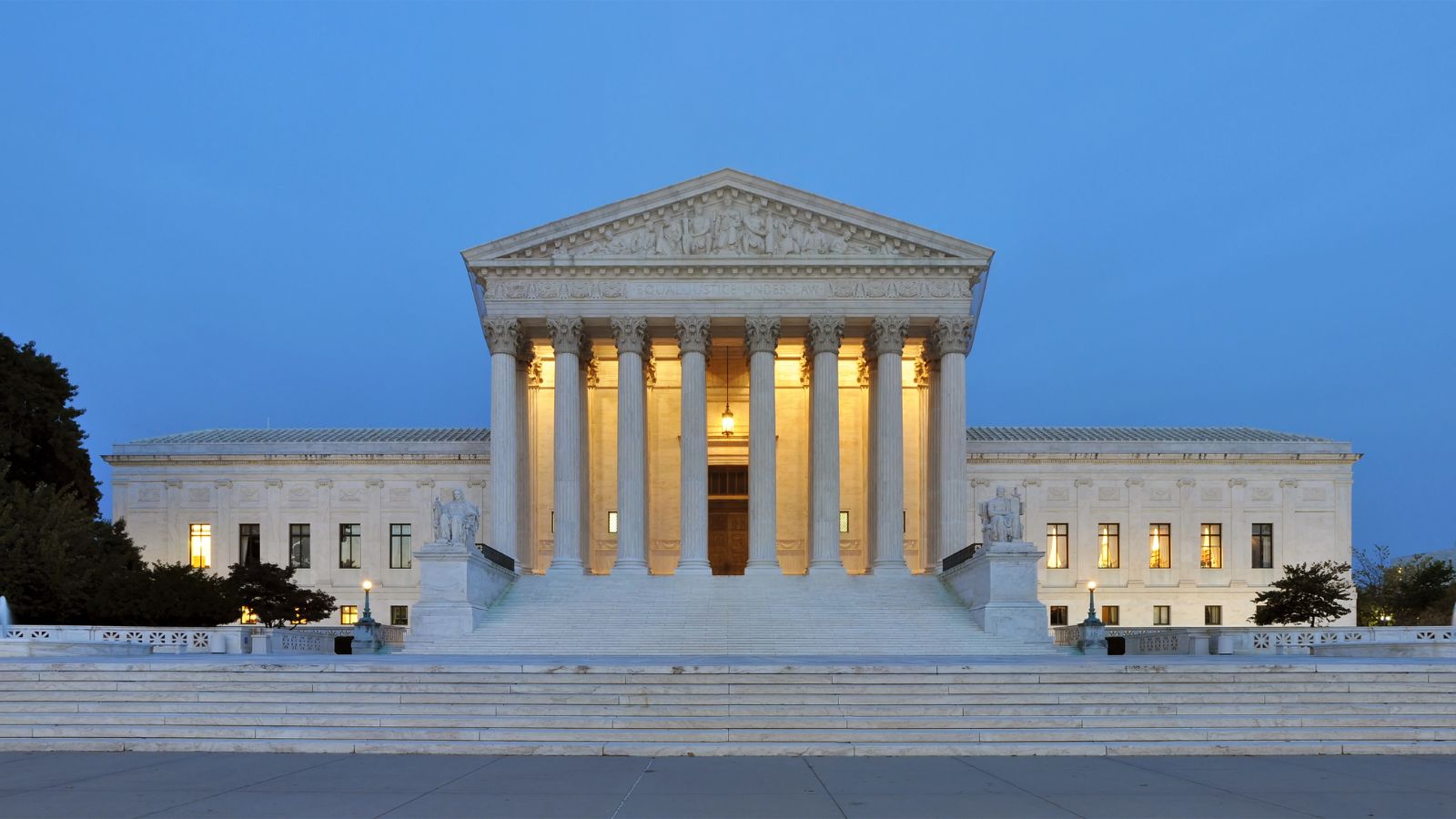
The Council on American-Islamic Relations (CAIR), the nation’s largest Muslim civil rights and advocacy organization, today announced the filing of a petition for certiorari in Kovac v. Wray, asking the US. Supreme Court to review a 5th circuit ruling about the legality of the government’s Orwellian watchlist that upended the ‘major questions’ doctrine.
[NOTE: Earlier this year, CAIR delivered oral argument on the case in the U.S. Court of Appeals for the Fifth Circuit.]
Kovac challenges the legality of the federal terrorist watchlist based on the “major questions doctrine.” The Supreme Court has explained that when a federal agency claims extraordinarily broad power to infringe on individual liberty that agency must show that Congress expressly authorized that power.
While the District Court agreed that the major questions doctrine applied, it found Congressional authorization for the federal terrorist watchlist based on vague general statements made by Congress regarding the Administrator of TSA and the Director of the FBI’s authorization to assess security threats to the air transportation system. On appeal, the Fifth Circuit took a different approach. They ruled that statutory text was unambiguous in its authorization for the watchlist, citing to agency mission statements and Congressional language acknowledging the existence of the watchlist. But the Fifth Circuit could point to no specific language that expressly and affirmatively authorized the watchlist itself.
Kovac’s Petition for Certiorari asks the Supreme Court to review the Fifth Circuit’s decision because the Fifth Circuit’s decision effectively eliminates the Major Questions Doctrine. Allowing general mission statements and passive acknowledgement to constitute the express language requirement of the Major Questions Doctrine would mean that any plausible basis for statutory authorization would qualify.
In a statement, CAIR Senior Litigation Attorney Justin Sadowsky said:
“The result is an opinion upholding a vast, opaque, and intrusive government program without ever identifying statutory language that clearly says the government can do this. Make no mistake: If this kind of ordinary statutory interpretation supplies the clear statement that the major-questions doctrine demands, there is no major-questions doctrine.
“If the Government is going to run a sprawling multi-agency program that destroys the lives of innocent Americans without a hearing or even evidence of any crime, the least our judiciary could demand is that Congress enact the program. But it hasn’t.”
END
CONTACT: CAIR Deputy Litigation Director Gadeir Abbas, 720-251-0425, gabbas@cair.com; CAIR Senior Litigation Attorney Justin Sadowsky, 202-742-6440, jsadowsky@cair.com; CAIR Staff Attorney Kim Noe-Lehenbauer, 202-516-4724, knoelehenbauer@cair.com